Commercial landscapes in Maryland, DC, and Virginia face a growing challenge: how to keep properties attractive and low-maintenance while dealing with hotter summers, inconsistent rainfall, and rising water costs. One smart and sustainable solution is to install drought resistant plants that thrive with minimal watering and maintenance.
Choosing the right drought resistant plants helps reduce landscape upkeep, supports sustainability goals, and creates lasting visual appeal for tenants, employees, and visitors. Here’s a look at some of the best options for commercial properties in the Mid-Atlantic region.
Why Drought Resistant Plants Make Sense for Commercial Properties
Commercial properties often span large areas that require regular care and resources to stay healthy and presentable. Traditional lawns and high-maintenance plants can quickly run up costs. Drought resistant plants help property managers cut down on:
-
Watering frequency
-
Irrigation system repairs
-
Seasonal plant replacement
-
Labor and material expenses
They also help meet sustainability goals and reduce the strain on local water systems. Plus, many of these plants offer unique textures, blooms, and colors that bring year-round interest to entryways, signage areas, medians, and walking paths.
Understanding the Mid-Atlantic Climate
Maryland, DC, and Northern Virginia sit within USDA Hardiness Zones 6b to 8a. Summers are hot and humid, while winters range from mild to cold. This means plants must be able to handle seasonal extremes and potential dry spells in late summer.
Choosing native or well-adapted species with proven drought resistance is the best way to get results that last. Below are some top-performing plant types for commercial use in this climate.
Ornamental Grasses
Ornamental grasses are a favorite in commercial landscaping due to their low water needs, durability, and strong visual structure.
Little Bluestem (Schizachyrium scoparium)
This native grass thrives in poor soils and needs very little water. It offers blue-green foliage in spring and summer, turning red and bronze in fall.
Switchgrass (Panicum virgatum)
Switchgrass is another native option that grows tall, handles full sun, and tolerates poor, dry soil. It’s ideal for borders and mass plantings.
Flowering Perennials
Many flowering perennials are drought tolerant once established and provide color throughout the growing season.
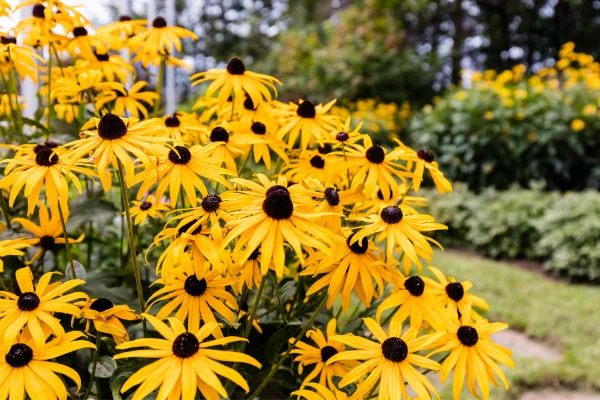
Black-Eyed Susan (Rudbeckia fulgida)
A Maryland state flower, this cheerful yellow bloomer thrives in full sun and dry soil. It’s low maintenance and attracts pollinators.
Purple Coneflower (Echinacea purpurea)
Known for its large purple blooms, this native perennial tolerates both drought and heat. It works well in garden beds and large open areas.
Yarrow (Achillea millefolium)
Yarrow grows well in dry soil and full sun. It produces flat-topped flowers in shades of white, yellow, and pink and pairs nicely with native grasses.
Shrubs
For commercial landscapes needing structure and privacy, drought resistant shrubs provide an excellent foundation.
Ninebark (Physocarpus opulifolius)
This tough native shrub tolerates poor soil and dry conditions. It offers striking foliage and blooms in spring, followed by peeling bark that adds winter interest.
Virginia Sweetspire (Itea virginica)
Sweetspire is adaptable to a range of soil types, including dry conditions. Its white flower spikes bloom in early summer, and its fall color is vibrant.
Juniper (Juniperus spp.)
A dependable evergreen, juniper is widely used in commercial landscapes. It holds up well to drought, salt, and heat and works great as groundcover or foundation planting.
Trees
Shade trees are important for energy efficiency and comfort on commercial properties. A few species offer drought resistance and strong regional performance.
Red Maple (Acer rubrum)
Red maple is native to the region and can tolerate occasional drought once established. It offers brilliant red fall color and good shade coverage.
Honeylocust (Gleditsia triacanthos var. inermis)
This adaptable tree is drought tolerant, offers filtered shade, and allows grass to grow underneath. It’s a smart choice for parking lots and wide-open areas.
Eastern Redcedar (Juniperus virginiana)
A tough native evergreen, this tree handles drought, poor soil, and urban pollution. It makes a good screen or focal tree on larger properties.
Groundcovers
Groundcovers are ideal for filling in tough-to-mow spaces or adding interest to landscape beds with limited irrigation.
Creeping Phlox (Phlox subulata)
This native groundcover forms a colorful spring carpet and tolerates full sun and dry, rocky soil.
Sedum (Sedum spp.)
Also known as stonecrop, sedum thrives in drought and comes in many textures and colors. It’s excellent for green roofs, retaining walls, and bed edges.
Water-Efficient Design Tips for Commercial Properties
Even the best drought resistant plants benefit from thoughtful landscape planning. For optimal results:
-
Group plants by water needs
-
Use mulch to retain soil moisture
-
Install efficient drip irrigation where needed
-
Choose native and adaptive species with proven local performance
For property managers looking to go a step further, resources like the EPA’s WaterSense Landscaping Guide offer useful strategies to reduce outdoor water use and improve sustainability.
Why Work with a Local Commercial Landscaping Expert
Every commercial property has unique challenges. Soil conditions, sun exposure, and traffic patterns all affect plant success. That’s why working with a local landscaping partner who understands the Mid-Atlantic climate and the needs of commercial properties is key.
Blythewood Landscape Management has years of experience designing and maintaining low-maintenance, water-wise landscapes that save property managers time and money. Our team knows which drought resistant plants perform well in Maryland, DC, and Virginia, and we can build out a plan that keeps your property attractive through every season.
Contact Blythewood Landscape Management Today!
Choosing the right drought resistant plants is more than a cost-saving measure; it’s a long-term investment in the look, performance, and sustainability of your property. Whether you’re managing a retail center, corporate campus, or multifamily community, upgrading your landscape with proven, low-maintenance plantings can deliver lasting value.
At Blythewood Landscape Management, we help commercial property managers across Maryland, DC, and Virginia make smart landscaping decisions that look good year-round and require less water and upkeep. Contact us today to schedule a consultation and see how we can improve your property with expertly selected drought resistant plants and professional commercial landscape services.
Frequently Asked Questions (FAQs) About Drought Resistant Plants
1. How much maintenance do drought resistant plants actually require?
Once established, most drought resistant plants require significantly less maintenance than traditional landscaping. They need less frequent watering and are generally more resistant to local pests. Regular seasonal cleanups and occasional pruning may still be needed, but overall, these plants are a smart choice for reducing upkeep on commercial properties.
2. Can drought resistant plants still look good year-round in the Mid-Atlantic climate?
Yes. Many drought resistant plants suited for Maryland, DC, and Virginia offer strong visual appeal throughout the seasons. For example, ornamental grasses and evergreen shrubs maintain their structure and color in winter, while native flowering perennials provide vibrant blooms in spring and summer. A well-designed landscape will include a mix of plants that add interest in every season.
3. Will I need to replace my existing irrigation system?
Not necessarily. In many cases, your current irrigation system can be adjusted or retrofitted to support drought resistant landscaping. Drip irrigation is often the most efficient option and may already be compatible with your system. A landscape professional can assess your setup and recommend the best approach to reduce water use without compromising plant health.

Bernie Granzow is the owner of Blythewood Landscape Management, a business inspired by his early experiences at the historic Blythewood Farms. Mentored by Mr. Alfred Smith Jr., Bernie turned his passion for the outdoors into a growing commercial landscaping company. Today, he continues to honor that legacy by leading Blythewood Landscape Management with dedication to the craft and the community.